For many food manufacturers, food safety is often associated with audits, inspections, certifications, and regulatory requirements. While these are important outcomes, they are not the foundation of a successful food safety program.
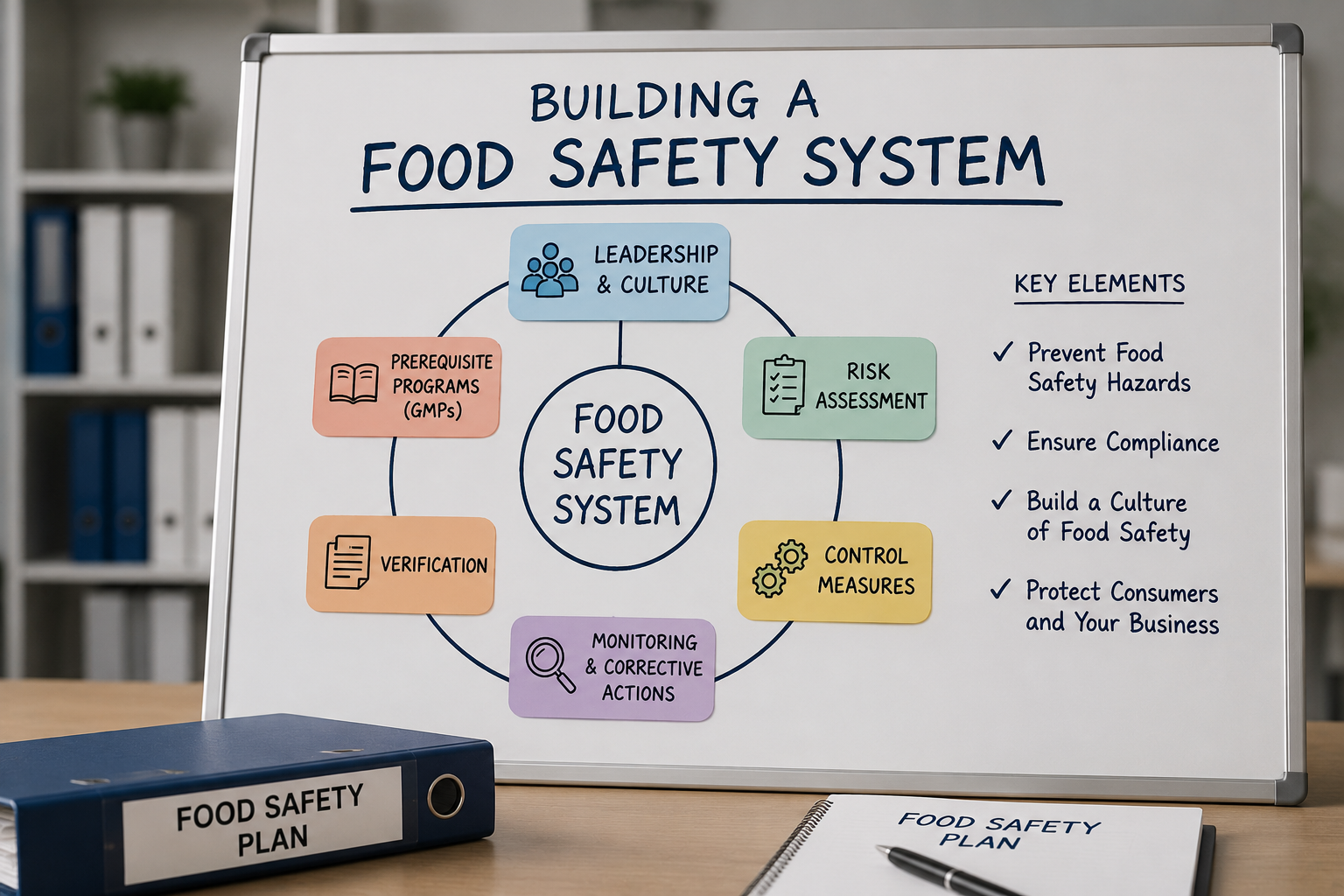
A strong food safety system is built on a combination of programs, procedures, employee behaviors, and leadership commitment that work together to consistently produce safe food.
Whether a company is preparing for customer audits, FDA inspections, or SQF certification, success begins with establishing a solid food safety foundation.
What Is a Food Safety System?
A food safety system is a structured approach to identifying, controlling, and preventing hazards that could affect product safety. It includes documented procedures, employee training, monitoring activities, verification processes, and management oversight.
An effective food safety system is not simply a collection of paperwork. It is an operational framework that becomes part of daily decision-making throughout the organization.
When properly implemented, a food safety system helps protect consumers, maintain regulatory compliance, reduce business risk, and support long-term growth.
Good Manufacturing Practices: The Foundation
Every successful food safety system begins with Good Manufacturing Practices (GMPs).
GMPs establish the basic conditions and activities necessary to produce safe food. Without strong GMPs, even the most sophisticated HACCP plan will struggle to be effective.
Key GMP elements include:
Employee hygiene and personal practices
Facility and equipment sanitation
Pest control programs
Preventive maintenance
Proper chemical handling and storage
Employee training
Facility design and condition
Operational controls that minimize contamination risks
Many food safety failures can be traced back to weaknesses in GMP programs rather than failures in HACCP itself.
HACCP: Managing Food Safety Risks
Hazard Analysis and Critical Control Points (HACCP) provides the framework for identifying and controlling significant food safety hazards.
A HACCP plan evaluates biological, chemical, and physical hazards that may occur throughout the manufacturing process and establishes controls to prevent or reduce those risks.
Core HACCP principles include:
Conducting a hazard analysis
Identifying critical control points
Establishing critical limits
Monitoring critical controls
Implementing corrective actions
Verifying system effectiveness
Maintaining records
A well-designed HACCP plan allows organizations to focus resources on the areas that present the greatest risk to food safety.
Supporting Programs That Strengthen the System
While GMPs and HACCP form the core of a food safety system, several supporting programs are equally important.
These programs often include:
Supplier Approval
Raw materials can introduce significant food safety risks. Supplier approval and monitoring programs help ensure ingredients meet established safety requirements.
Allergen Management
Food allergens remain one of the leading causes of food recalls. Effective allergen controls reduce the risk of cross-contact and labeling errors.
Traceability and Recall Readiness
Organizations must be able to quickly trace products and respond effectively if a food safety issue occurs.
Environmental Monitoring
For many products and facilities, environmental monitoring programs provide valuable verification that sanitation controls are working as intended.
Training
Employees can only execute food safety procedures effectively when they understand both the requirements and the reasons behind them.
Food Safety Culture Matters
Even the best food safety programs can fail when food safety is not supported by organizational culture.
Food safety culture reflects how employees and leaders behave when faced with competing priorities. It influences daily decisions, problem-solving, communication, and accountability.
Organizations with strong food safety cultures typically demonstrate:
Visible leadership commitment
Open communication
Employee engagement
Accountability at all levels
Consistent decision-making
Adequate investment in food safety programs
Food safety should not be viewed as the responsibility of the quality department alone. It must be supported throughout the organization.
Preparing for Future Growth
As companies grow, customer expectations and regulatory requirements often become more demanding.
A strong food safety system creates a foundation for:
FDA compliance
Customer audits
GFSI requirements
SQF certification
New product development
Expansion into new markets
Organizations that invest early in building effective food safety systems are often better positioned for sustainable growth and long-term success.
Conclusion
A successful food safety system is built on more than documentation and audit preparation.
Strong GMPs, an effective HACCP plan, supporting prerequisite programs, employee engagement, and leadership commitment all play essential roles in protecting consumers and supporting business growth.
Food manufacturers that establish these foundations early are better prepared to meet customer expectations, regulatory requirements, and future certification goals while building a culture where food safety remains a core business value.
How Precision Food Advisory Can Help
At Precision Food Advisory, we help food manufacturers strengthen food safety systems, prepare for audits and inspections, improve regulatory compliance, and build practical programs that support long-term operational success. Whether your organization is preparing for SQF certification, strengthening HACCP programs, improving GMP compliance, or addressing specific food safety challenges, we provide hands-on guidance tailored to your operation.
To learn more about our food safety consulting services, contact Precision Food Advisory today.